From MVP to Production: An Engineering Checklist
The essential product, security, data, testing and operations work needed to move an MVP from demonstration to dependable production use.

OrScale Editorial Team
Product engineering · AI · Automation
Define what production-ready means for this product
Production readiness is contextual. A private pilot for ten known users does not need the same infrastructure as a public financial platform. It still needs an explicit service promise: who can use it, which journeys must work, what data must be protected and how quickly the team can recover from failure.
Turn that promise into launch criteria. This prevents teams from polishing secondary screens while authentication, billing or recovery remain uncertain.
Secure the system and its data
Client-side visibility rules are not authorization. Every sensitive read and write must be enforced on the server. Secrets belong in managed environment settings, inputs require validation and privileged actions need audit records. Review how accounts are created, recovered and removed.
- Back up production data and test that a restore actually works.
- Use safe, reviewable database migrations with rollback plans.
- Apply least privilege to users, services and deployment credentials.
- Set retention rules for logs and customer data.
- Document how security updates and dependency risks are handled.
Make deployment boring
A production release should be repeatable from version control, not assembled through hidden manual steps. Separate development, preview and production settings. Run type checks and critical tests before deployment, and make it possible to identify exactly which version is running.
Monitoring should cover availability, application errors and business outcomes. Logs need enough context to trace a request without exposing sensitive information. Alerts should reach an owner with a clear escalation path.
Launch with an operating plan
Decide who watches the launch, how users report problems and which metrics determine whether to continue, pause or roll back. Prepare support responses for known limitations. A smaller controlled release often produces better learning than a large launch with no recovery room.
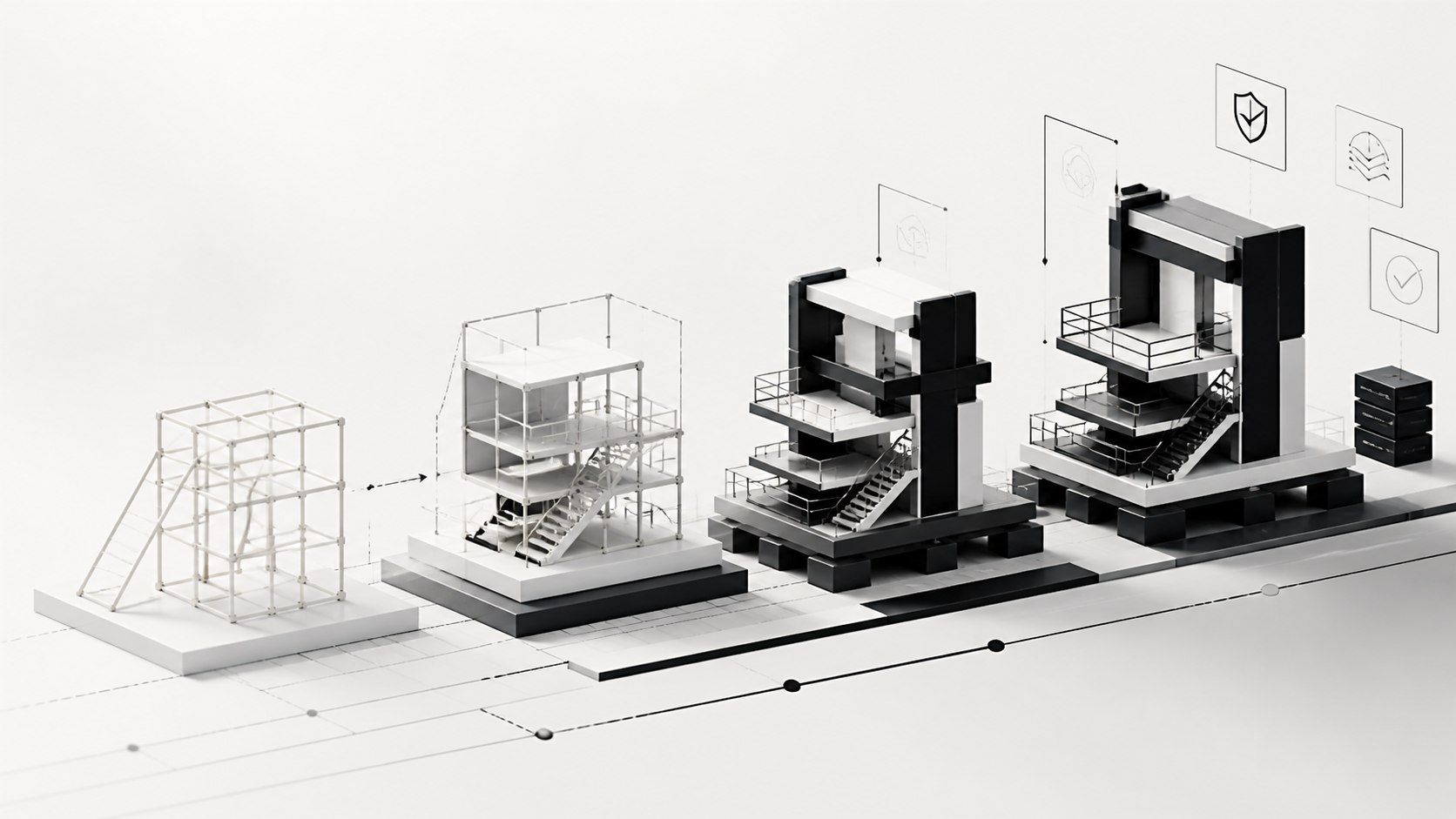
The transition is complete when the team can change the product safely after launch. Documentation, observability and ownership are what turn a successful release into a sustainable product.
Frequently asked questions
Questions about product engineering
What is the difference between an MVP and a production product?
An MVP proves value with limited scope. A production product adds the reliability, security, operability and ownership required for real users to depend on that value.
Do we need complete test coverage before launch?
No. Prioritize realistic tests for authentication, payments, permissions, data changes and the primary user journey. Coverage should follow business risk.
What should be monitored after launch?
Monitor uptime, application errors, latency and business outcomes such as completed signups, payments or processed jobs. Operational metrics should reveal customer impact, not only server health.